DISCOVER
In Gialova, bird migration never truly ends — it simply changes color with the seasons.
Βy Paulina Björk Kapsalis
Every year, World Migratory Bird Day reminds us of the wonder and fragility of one of nature’s greatest spectacles: the long-distance journeys of birds across continents and oceans. These annual migrations symbolize endurance and adaptability, and highlight the importance of preserving vital habitats where birds can rest, feed, and breed safely. One of the most remarkable places to witness this spectacle is Gialova Lagoon, Greece’s southernmost major wetland — a utopia for bird lovers and conservationists alike.
Nestled in the Peloponnese, Gialova Lagoon supports a stunning diversity of life. A vibrant ecosystem, it contains a mosaic of habitats, from reedbeds and marshes to sandy shores, providing shelter to more than 270 species of resident and migratory birds.
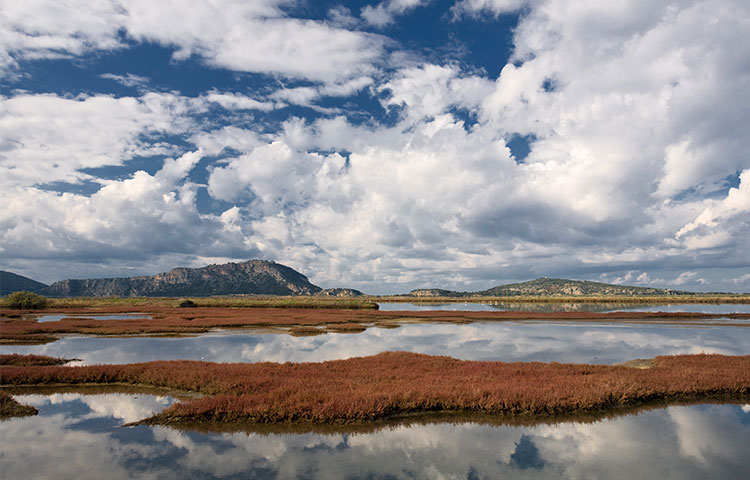
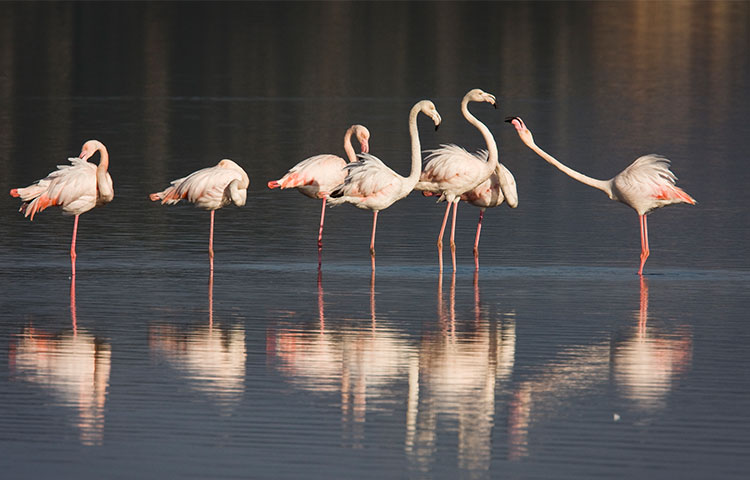
Right now, as the northern skies grow cold, Gialova becomes a sanctuary for countless wintering and passing birds. Common starlings (Sturnus vulgaris) gather in thousands, forming mesmerizing murmurations that twist and pulse against the evening light before settling to rest. Greater flamingos (Phoenicopterus roseus) also grace the lagoon during these cooler months, painting the landscape in soft hues of pink as they wade gracefully through the shallows. Their vibrant color, drawn from a plankton-rich diet, makes them an unforgettable sight against the golden reflections of the winter sun.
One of the most thrilling sightings in October is the osprey (Pandion haliaetus), known in Greek as the Psaraetos — the “fishing eagle.” Aptly named, it’s a master angler, diving headfirst into the water to seize fish in its sharp talons. Though rare, this striking raptor is a major attraction for birdwatchers, stopping in Gialova on its migration to Africa and mostly staying near the sea. The osprey is usually seen in September and October, before returning again in spring. As biologist and wildlife photographer Andrea Bonetti notes: “Some years, we’ve even noticed one staying over winter.”
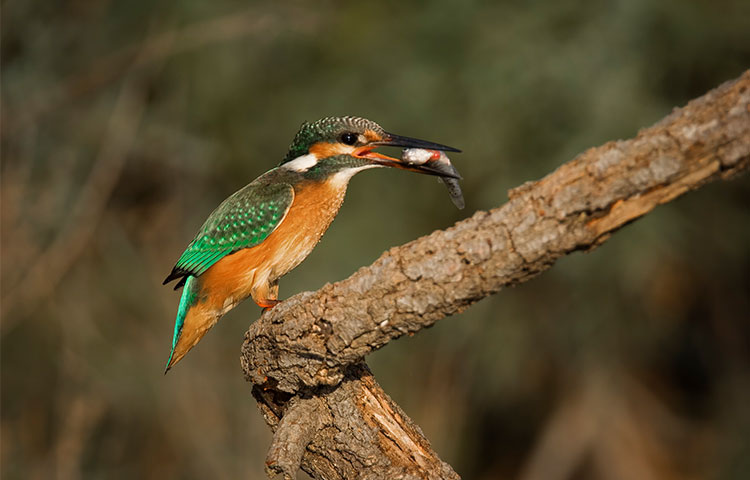
Meanwhile, the common kingfisher (Alcedo atthis) dazzles even the most seasoned observer with its jewel-like feathers as it darts low over the water in pursuit of tiny fish. High above the lagoon, the majestic Eurasian eagle-owl (Bubo bubo) — one of Europe’s largest owls — keeps watch year-round. Though not migratory, it shares the wetland with many passing species, its haunting “hoots” echoing through the winter nights. Alongside it, long-eared owls (Asio otus) demonstrate remarkable hunting prowess. A single pair can catch more than ten mice in one night — a testament to their efficiency as skilled nocturnal hunters.
Springtime Returns
With the arrival of spring, Gialova awakens with renewed color and song as migratory species return from their long winter sojourns in Africa. Among the first to appear is the purple heron (Ardea purpurea), whose elegant form and chestnut plumage blends perfectly with the wetland’s reedbeds.
Sharing this space is the great white egret (Ardea alba), a tall, graceful bird once hunted for its long white feathers but now a symbol of successful conservation efforts. After nesting in northern Greece and eastern Europe, a number of great white egrets return to Gialova in winter. Bonetti explains their presence: “There used to be a fish farm close by. I would watch the great egret pick up fish there like they were in a supermarket. Now the fish farm is gone, but the egrets remain!”
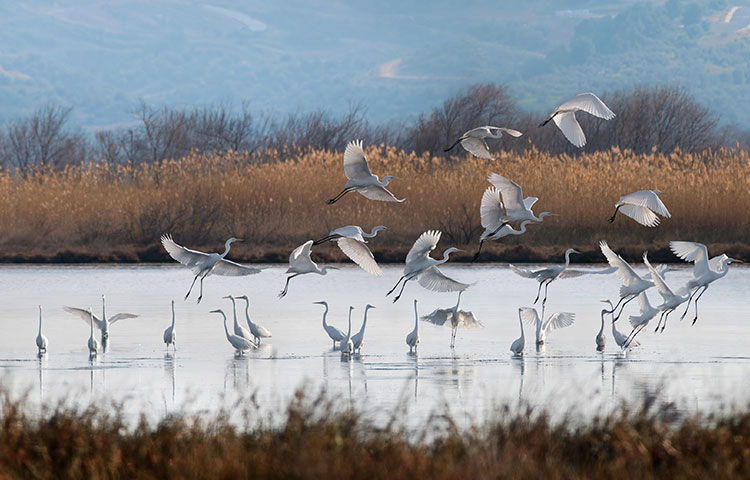
Visiting Gialova Lagoon during World Migratory Bird Day on October 11 offers not only an opportunity to witness the wonder of avian life but also a reminder of our role in protecting it. The lagoon itself tells a story of change — its waters are mainly salty, though fed in part by freshwater springs. Over time, the freshwater marsh has shrunk. As Bonetti explains: “When people started managing the lagoon — this was in the 50s — they created openings to the sea in order for fishing, increasing salinity. On the one hand, birds like flamingos love salt water so that population has increased, but the salinity is too high, reducing the biodiversity.”
This delicate balance makes conservation efforts more vital than ever. Whether through responsible tourism, supporting wetland preservation, or simply spreading awareness, every action helps safeguard the future of these incredible travelers.
So, as millions of birds embark on their long journeys this season, take a moment to look to the skies. From the tiniest kingfisher to the towering flamingo, every bird has a story waiting to be discovered — one of survival, resilience, and beauty.