DISCOVER
Edited by Paulina Björk Kapsalis
Christopher Nolan wanted his actors to experience the world of The Odyssey, not imagine it. “Part of my preparation is to know that I want to go to places,” he explained in a recent interview with Greek broadcaster MEGA. “I want to go to reality. I want to touch reality and bring the actors there.”
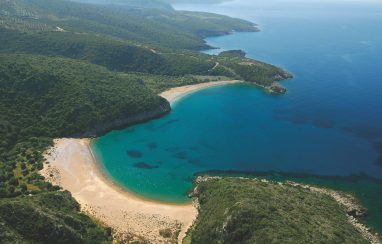
In Messinia, the southwestern “finger” of the Peloponnese, the sea gives way to cliffs and hidden coves, while olive groves stretch toward ancient castles. At Voidokilia Beach and nearby Nestor’s Cave, Homer’s epic has never felt like distant literature, but something that belongs to the land itself. It was a natural fit for Nolan.
Reflecting on the experience, he described arriving in the Peloponnese and “feeling the light, the sea, the sand, and knowing they’re the same as they were in ancient times.” It is a simple observation, yet one that captures why this part of Greece became so much more than a filming location. Standing above Voidokilia or inside the cool darkness of Nestor’s Cave, it’s easy to understand why. Some landscapes seem to compress time. For a director known for practical filmmaking, these landscapes were not merely a backdrop – they became part of the story.
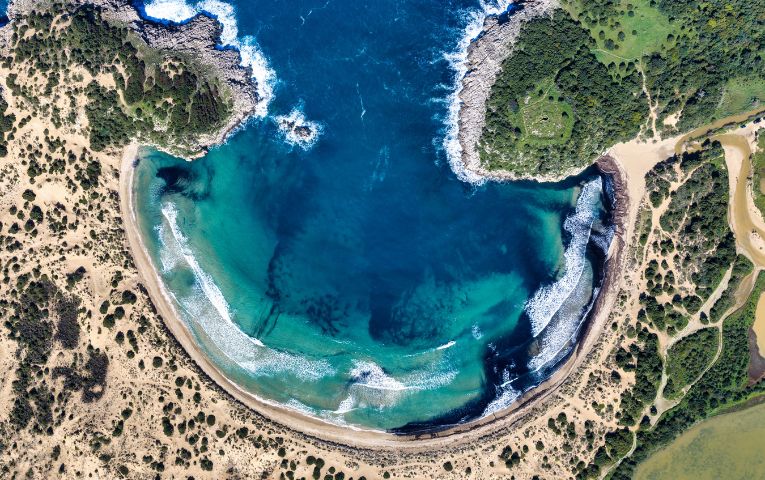
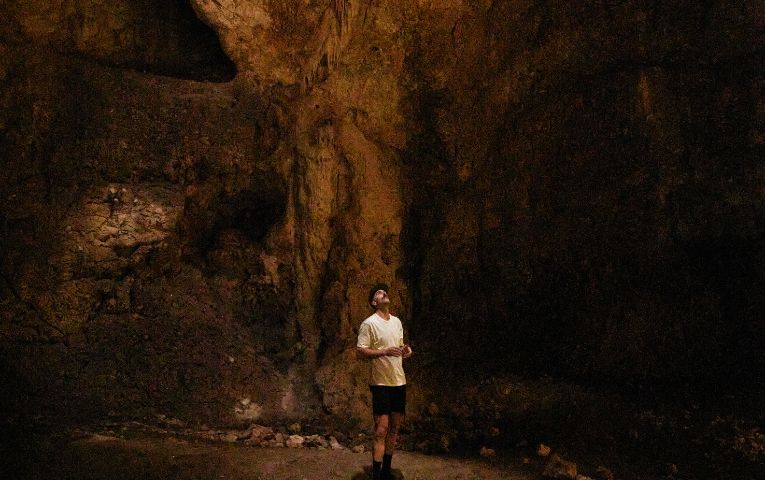
For Matt Damon, who portrays Odysseus, that choice was unforgettable. “That was the first location we got to that involved hiking. Every day would start with a hike through the dunes and then up the hill to get to the cave,” which, he told the Greek reporter, the production had transformed into a “natural soundstage.” “It was beyond anything. Forty sheep were crawling around… It’s just – everything is real in Chris’ movies. Everything is captured in-camera.”
According to the Hellenic Film Commission, filming in Greece took place across some of Messinia’s most iconic locations, including Pylos, Nestor’s Cave, Voidokilia Beach, and Methoni Castle. Traditional boats, practical effects, and hundreds of local extras helped bring Homer’s world to life, making it one of the largest international productions ever hosted in the region.
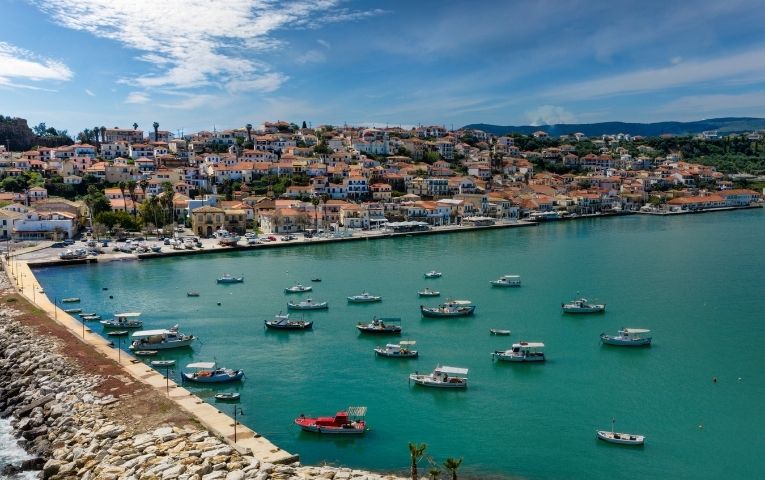
For Nolan, however, filming at Nestor’s Cave almost didn’t happen. Recalling his first visit with production designer Ruth De Jong, he admitted, “We’ll go look at this cave. We’ll never film here. We’ll build a set back in Hollywood.” It was De Jong who persuaded him otherwise. “Why not? This place is incredible. Let’s just film here.” The decision proved transformative.
“To go up this goat’s path and spend days in there with Matt Damon as Odysseus and all the actors there… it was a very, very special environment,” Nolan recalled. “It creates a very special feel in the film to be in real places like that.”
Those challenges became part of the production itself. Speaking at CinemaCon, Nolan described the shooting the film as “an absolute nightmare, but in all the right ways,” recalling days spent filming on boats, in caves, across mountains, and through changing weather. Damon echoed that sentiment in an interview with Reuters, calling The Odyssey “without question the hardest film, the most challenging, that I’ve ever done.” He also praised Nolan’s commitment to practical filmmaking. “If you see a thousand people, then there are a thousand people there,” Damon said. “The ships – those are real ships in the background.”
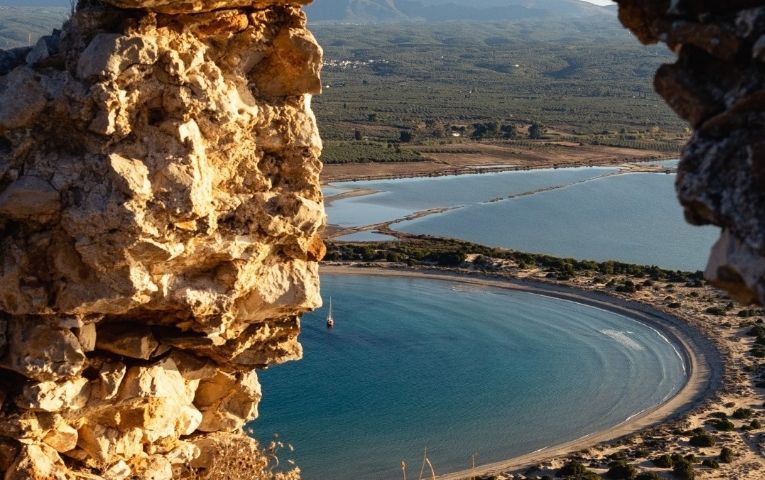
Long before cinema, these shores inspired one of the world’s greatest epics. Today, they continue to tell stories in a different language: through light reflected on the Ionian Sea, wind across the dunes of Voidokilia, and stone shaped by thousands of years of history.
In Nolan’s The Odyssey, Messinia is more than a setting. It’s a protagonist in its own right.