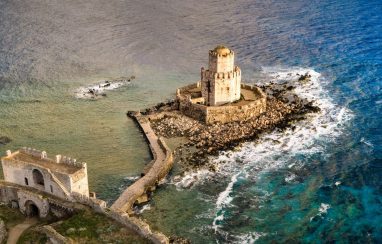
EMBRACE
Each glass of Messinian wine is a dialogue between centuries of tradition and today’s craftsmanship.
By Paulina Björk Kapsalis
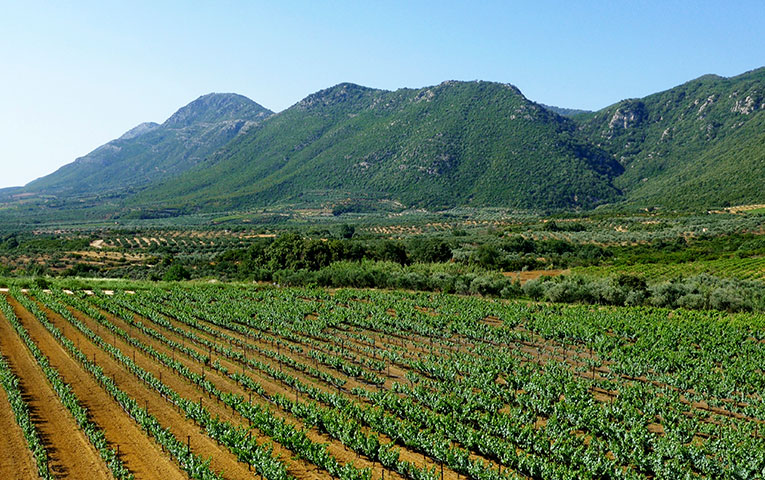
The late summer sun spills golden light across the grapes. They hang heavy and warm on the vines, their leaves stirring only slightly in the Ionian breeze drifting inland from the sea. You move between the rows in quiet rhythm as baskets fill steadily with fruit destined to become some of Greece’s finest wines. The scents of warm soil and a faint saltiness from the coast mingle in the air. Closing your eyes, you sense that you could be anywhere in time, because this ritual has repeated itself here, year after year, for countless generations.
This is September in Messinia. The grape harvest is not only a season of production; it’s an act of stewardship, carrying forward a story that began thousands of years earlier. Each harvest echoes those that came before, connecting the present to a lineage of farmers who worked these same hillsides centuries ago, like memory preserved in practice.

A Glass of Messinia
You lift the glass to the light, and the wine glows like a ruby. The first swirl releases a cascade of aromas: dark berries and warm oak. The rim touches your lips, and the taste carries you straight into the Messinian landscape itself: sun-warmed hills, salty sea breezes, and the vines rooted deep in ancient soil.
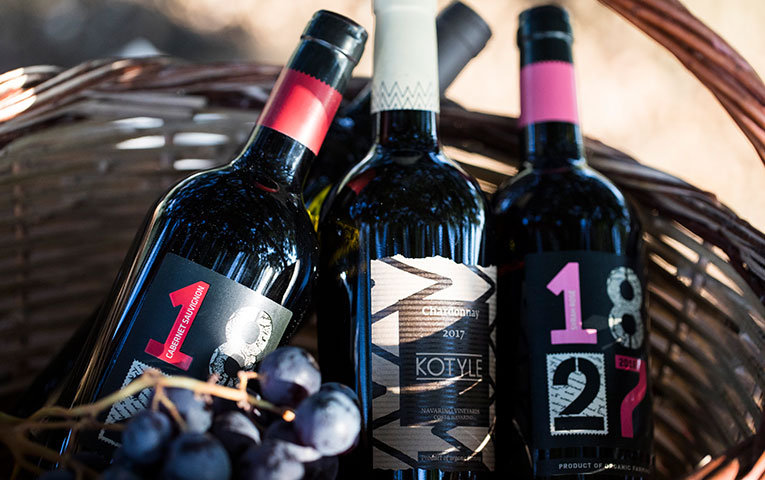
This is what the vine harvest brings to guests at Costa Navarino, sampling the bold yet refined Cabernet Sauvignon from the Navarino Vineyards Kotyle series. Named after King Nestor’s Cup, these wines bridge mythology, history, and modern craftsmanship. Drawn from non-irrigated, low-yield vineyards at 700 meters, the wine is aged for 18 months in French oak and embodies Messinia’s terroir in every sip – structured, expressive, and lingering long after the glass is empty.
The Kotyle White, meanwhile, is a barrel-aged Chardonnay, vibrant yet layered. Four to five months in oak lend elegance without diminishing its freshness. Beyond the Kotyle series, Navarino Vineyards produces a wider range of wines that reflect the diversity of Messinia’s terroirs, ensuring there is a bottle to suit every palate.
For those eager to deepen their appreciation of Greek wines, Costa Navarino hosts masterclasses guided by expert sommeliers. These sessions introduce participants to a variety of wines from Messinia and across Greece, highlighting their aromas, flavors, and unique terroirs. Each tasting is complemented by food pairings, offering guests a deeper understanding of how local gastronomy and wine traditions intertwine.
Among the World’s Oldest Vineyards
Messinia’s viticultural roots stretch deeper than most imagine. Recently, archaeologists at Costa Navarino discovered grape seeds preserved for more than 4,000 years inside a clay vessel, or pithos. Dating to the Early Helladic II period (ca. 2650–2200 BCE), they stand among the earliest evidence of vine cultivation anywhere.
This discovery doesn’t surprise locals. It merely affirms what they’ve always known: the vine is inseparable from Messinia’s identity. In the Iliad, Homer speaks of Pylos wine, considered an essential offering to the gods and a symbol of hospitality in the region. Beyond poetry, King Nestor – whose palace stands in the hills above Costa Navarino and whose “cup” inspired the Kotyle wines – hosted feasts where wine played a central role in diplomacy.
Later, throughout Byzantine and Venetian times, monasteries in the Peloponnese were vital in preserving winemaking knowledge. Messinia’s monastic estates often doubled as vineyards, linking wine to both spiritual and cultural life.
Today, the soil nurtures everything from international varieties like Cabernet and Chardonnay to indigenous grapes such as Roditis, Fileri, and Agiorgitiko. Navarino Vineyards’ lively and refreshing 1827 White, named for the historic Battle of Navarino, perfectly blends Chardonnay and Roditis.
A Living Heritage
What makes the Messinian wines memorable is not only their flavor but also their sense of connection. Each sip links the clay cup of Nestor with the modern glass in your hand, weaving past and present together. The grape harvest here is a bridge between ancient seeds unearthed in clay vessels and contemporary wines poured at masterclasses; between farmers’ toil and families’ celebrations.
At Costa Navarino, heritage is not frozen in museums. It lives in the vineyards, in the rhythm of the harvest, and in the glass you raise. To drink the wine of Messinia is to step into a story that began millennia ago and still unfolds today.