PEOPLE
At Perovino, Bahraini chef Tala Bashmi showcased how a single dish can carry history, memory, and innovation.
By Paulina Björk Kapsalis
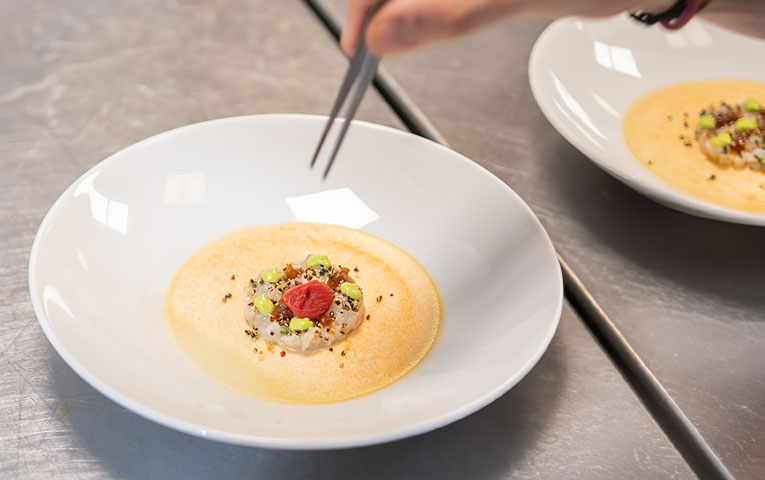
At Costa Navarino’s Perovino, the August evening carried a special kind of magic. Around a long communal table, guests savored a citrus-infused ice cream, elevated by the unexpected depth of “lumee”—dried black lime beloved in Khaleeji cuisine—capturing the spirit of the gathering. While citrus is a familiar note in Messinia, here it spoke with a new accent, blending brightness with Bahraini tradition. Like the evening itself, the dessert became a meeting point of cultures and flavors, designed by one of the most influential voices in Middle Eastern gastronomy, Tala Bashmi.
Bringing Bahrain’s culinary heritage into the global spotlight with her signature creativity and respect for tradition, Bashmi’s journey has been anything but conventional—first an artist and professional football player, she eventually found her true calling in the kitchen, where food became her canvas for identity, culture, and storytelling. Today, she’s not only a celebrated chef, named the Best Female Chef in the Middle East & North Africa in 2022, but also a UNWTO Gastronomy Ambassador for Bahrain, a role that allows her to share the flavors of Khaleeji cuisine with the world.
Food, in Tala Bashmi’s hands, is a language of identity and storytelling. Following the special event at Costa Navarino, we took the opportunity to talk to her about her philosophy, inspirations, and what lies ahead.
Tell us about the evening at Perovino. What made it special to you?
What made it truly special for me was how it shifted from service to genuine conversation. Sharing one long communal table let us move beyond formalities. The harmony between land and sea set the perfect tone for the night. It wasn’t just a menu; it was an invitation to sit together, cross cultures with a spoon, and forge new memories over a single meal. That sense of gathering—cultures coming together at one table—reminded me why I cook in the first place.
Using local and seasonal ingredients is central to your cooking philosophy—something Costa Navarino also champions. How was it cooking with the local ingredients of Messinia?
I always enjoy working with fresh, local herbs, fruits, and vegetables, and it’s important to me to honor those flavors when I blend them into my Khaleeji dishes. The region’s abundance of seafood is a joy, too; the clams in my leek-and-clam dish brought wonderful local character. The local lamb, meanwhile, is incredibly tender and flavorful, and it marries beautifully with the aromatic spices I use for marinating.
Middle Eastern and Mediterranean cuisine are generally quite different. But are there any notable similarities between Khaleeji cuisine and the local food here?
In Khaleeji cooking, we often feature slow-cooked rice paired with beef, chicken, lamb, or seafood and build rich stews infused with aromatic spices such as saffron, cardamom, cinnamon, and cumin, to layer warmth and depth.
I feel like Mediterranean cuisine shares that same spirit of simplicity and generosity, with some common use of spices. Here, olive oil is the foundation, sun-ripened vegetables and fresh herbs like oregano and thyme bring brightness, and grilled fish or lamb is lifted by a squeeze of citrus.
At the heart of both traditions is the communal table: shared plates and the joy of tasting and telling stories together.
For those unfamiliar with the Gulf’s culinary landscape, how would you describe the flavors and dishes you grew up with?
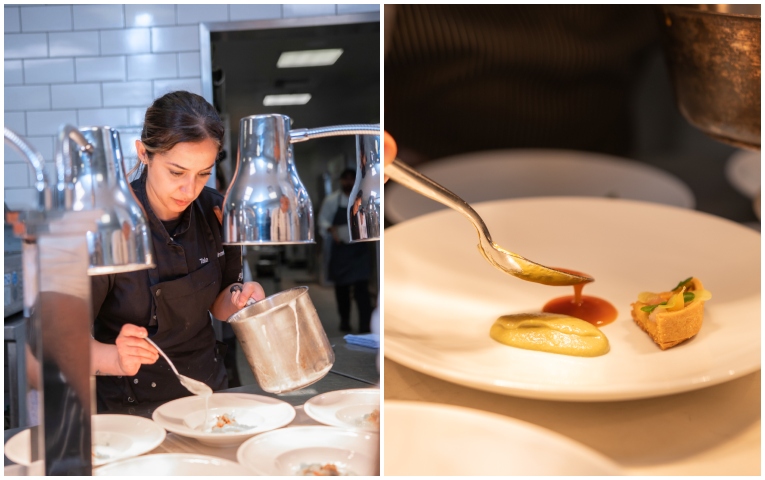
As a Bahraini chef, I grew up with dishes telling stories of the sea and the ancient trade routes that connected our shores to the wider world. Khaleeji cuisine, spanning the Arabian Gulf states of Kuwait, Bahrain, Qatar, the UAE, southern Iraq, eastern Saudi Arabia, and Oman, embodies centuries of coastal and desert traditions influenced by Arab, Persian, Indian, and Turkish trade connections.
Its dishes feature aromatic spices such as cumin, coriander, and cardamom, and fresh herbs applied to slow-cooked, tender meats and abundant seafood, all resting on rice or other grains. These timeless combinations of warmth, brightness, and depth are what shaped my palate and continue to inspire every plate I create.
What made you want to become a chef?
I didn’t follow a traditional path. I studied art and played professional football first, but I always found myself drawn back to food. It’s the one medium that lets me express identity, culture, emotion, and creativity all at once. Cooking felt like coming home, even when I was still learning. After all, what better universal love language is there than food?
What does it mean to you to represent Bahrain’s culinary identity on the global stage as a UNWTO Gastronomy Ambassador?
I am honored to have received the title of UNWTO Gastronomy Ambassador for Bahrain. To me, this role means carrying the essence of our island to the world.
Khaleeji cuisine is picking up momentum worldwide right now, and I love that I get to reintroduce traditional flavors with a modern interpretation. The ingredients tell stories of pearl divers, spice routes, and family gatherings—and I’m proud to give those stories a voice on an international stage.
Beyond cooking, this ambassadorship allows me to spark global curiosity about our traditions and flavors. When someone tastes a dish I’ve created, they’re experiencing Bahrain’s history and heart, and that makes every moment on the global stage deeply meaningful.
How do you balance honoring traditional Bahraini recipes and pushing creative boundaries in your kitchen?
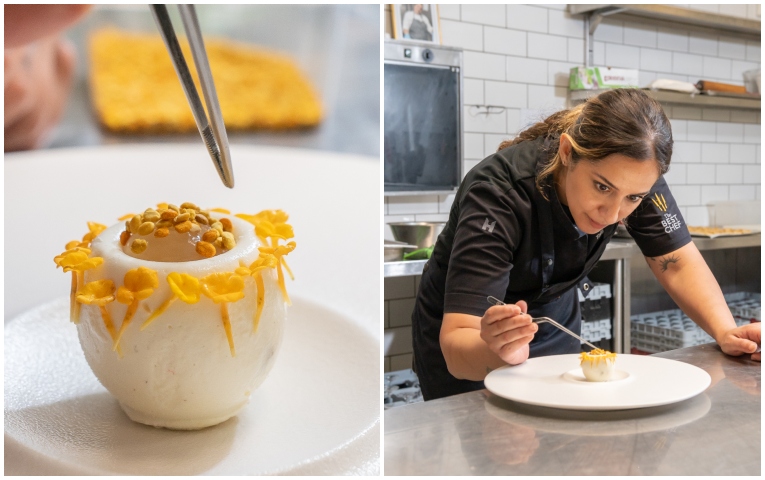
I start with the heart of a traditional Bahraini recipe—its core spices, textures, and techniques—and treat that as my compass. From there, I introduce subtle twists: a new ingredient, a modern cooking method, or a refreshed presentation that shines a light on those original flavors rather than masking them. This approach lets every dish feel both authentic and timeless, honoring the past while inviting diners to experience something unexpected.
Some critics might worry that modernization can dilute culinary heritage. Do you think tradition should be preserved as-is, or is evolution necessary for survival?
I see tradition as our living foundation—it captures flavors, techniques, and stories passed down through generations. Yet a recipe that never evolves risks becoming a static relic. By honoring original methods while thoughtfully introducing new ingredients or techniques, we keep our heritage vibrant for tomorrow’s diners.
I’ve even hosted medieval Arab dinner feasts, digging into ancient manuscripts to resurrect recipes long forgotten. For my lamb dish, I revived a centuries-old spice blend straight from one of those texts—an example of then-and-now coming together to build bold, layered flavors.
My dishes aim to evoke nostalgia while delivering real flavor impact and staying true to each recipe’s heritage. Finding that balance between respecting the past and embracing innovation is the heart of why I cook.
We love the way you highlight unique ingredients on your social channels. Are there any dishes or ingredients that you’ve recently rediscovered or reinterpreted in a surprising way?
I can’t get enough of “lumee”—those dried black limes that pack so much flavor. I always carry bags of them to every event I cook, just to show how endlessly they can elevate everything from savory to sweet dishes. You could say I’m on a mission to introduce lumee to the world!
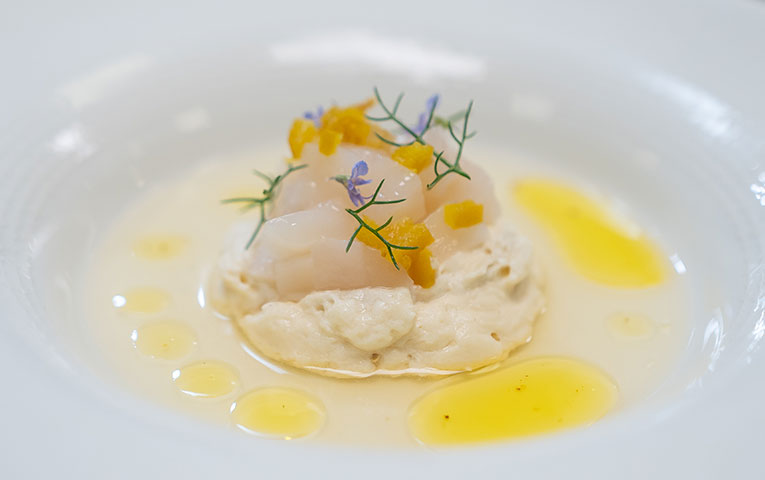
Another ingredient I lean on is “jameed,” the fermented hard yogurt most people know from “mansaf,” the rice-and-lamb classic. I’ve come to love its dried form in sweets. At Perοvino, for example, I featured a jameed-infused citrus dessert and used lumee to turn it into ice cream. It’s moments like that which remind me how a simple, humble pantry staple can steal the show when you give it a new role.
What about Greek food—did you try anything here that you really liked?
I love how Greek cuisine celebrates freshness above all else. Take a simply grilled fish—charred just so and drizzled with silky olive oil and a squeeze of local lemon, it becomes this perfect harmony of bright, clean flavors. To me, that’s the essence of deliciousness.
Then there’s taramosalata, with its smooth, velvety texture and just the right kiss of salt. One bite and you understand how something so humble can feel so indulgent. Honestly, there isn’t much I don’t love about Greek food!
You were voted the number one female chef in the Middle East and North Africa (MENA) in 2022. How does it feel to be able to inspire female chefs, and how do you think women can be empowered to enter this demanding and mainly male-dominated industry?
Being named the best female chef in MENA was incredibly moving. Growing up, I rarely saw women leading in the kitchen, so if my journey can light the way for someone else, that’s the greatest reward. I think empowerment starts with visibility, mentorship, and creating spaces where women can lead without having to justify their presence.
Leaving Fusions by Tala marked the end of a major chapter. What are you focused on now, and what’s next on the horizon?
That’s true, but I’m energized by what’s next. Right now, I’m in a space of reflection and reinvention, sketching out concepts that dive even deeper into Bahrain’s identity, history, and the character of its land.
I’m still drawn to pushing creative boundaries, but this time with extra heart. Every dish has to feel honest and rooted in our traditions, yet speak a new language. Whatever comes next needs to carry real meaning, both for me as a chef and for anyone who sits at my table.