PEOPLE
The legendary coach on tennis, innovation, and his plans for expanding the Mouratoglou Tennis Center at Costa Navarino, the Greek destination he calls home.
By Giorgos Tsiros
Patrick Mouratoglou is widely regarded as one of the great minds of modern tennis. With Serena Williams he made history, guiding her to ten Grand Slam titles during a decade-long partnership. Through his academy, he has nurtured a new generation of stars, from Stefanos Tsitsipas and Coco Gauff to Simona Halep, Naomi Osaka and Holger Rune, while his easy-to-follow training videos have inspired thousands of amateurs worldwide.
What sets Mouratoglou apart is his dual role as both coach and visionary: a guru who offers the smallest of technical details to improve a beginner’s forehand as well as the radical ideas that could shape the future of tennis itself. “The sport saved my life,” he has often said, and giving back to it is a mission he now serves with unrivaled knowledge, devotion and insight.
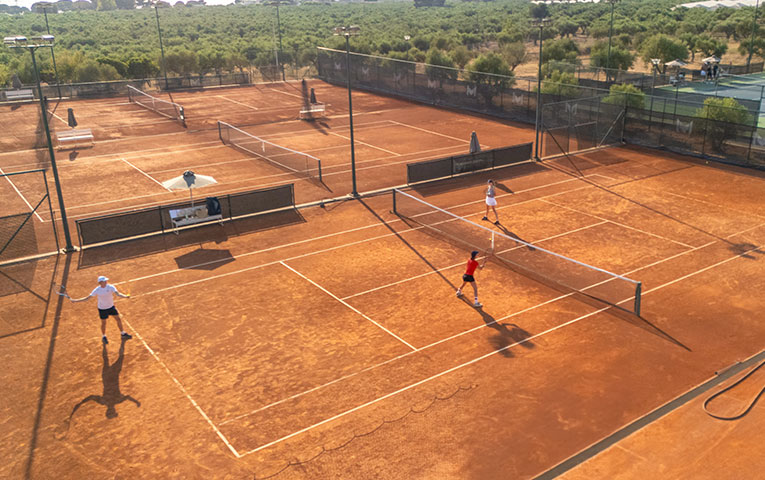
In Greece, his name has become synonymous with Costa Navarino, which in 2021 became the first European location for a Mouratoglou Tennis Center. The facility has since evolved into a destination in its own right, offering visitors of all ages and abilities the chance to improve their skills with handpicked professionals or to rediscover tennis as pure enjoyment. Each summer, Mouratoglou returns with his family for a well-earned vacation, always finding time to share his thoughts on the sport he continues to reinvent.
Growing the game
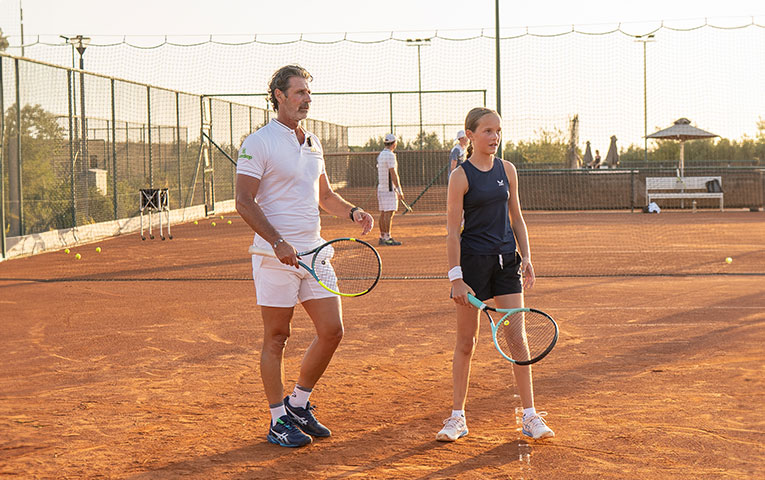
The passion for tennis has shaped every step of Patrick Mouratoglou’s journey. In 2026, he will celebrate the 30th anniversary of his academy; what began with two rented courts has become one of the world’s most influential ecosystems for developing talent.
“I remember when I started, I was renting two courts in a club for only a few hours because I couldn’t afford more,” he says. “We’ve come a long way; it’s thousands of hours of work, a lot of passion, and a fantastic team of people all equally dedicated to tennis.”
That spirit is now reflected in fifteen different centers worldwide, from Europe and the US to Asia and South America. And the expansion continues. “We want to keep developing, opening new centers every year. But always in places where we know the quality is super high.”
Costa Navarino is a case in point. “It’s a great example,” Mouratoglou notes. “We’re opening new courts at Mandarin Oriental, Costa Navarino and W Costa Navarino – not only tennis but also padel and pickleball. We’re going into all racquet sports. And every year more people come here, not only because the resort is unbelievable, but also because they know they can play every day with passionate people who will help them evolve.”
For Mouratoglou, that is the essence: “Whatever age you are, whatever level you are, there’s always room for improvement. That’s the story of life; to keep improving.”
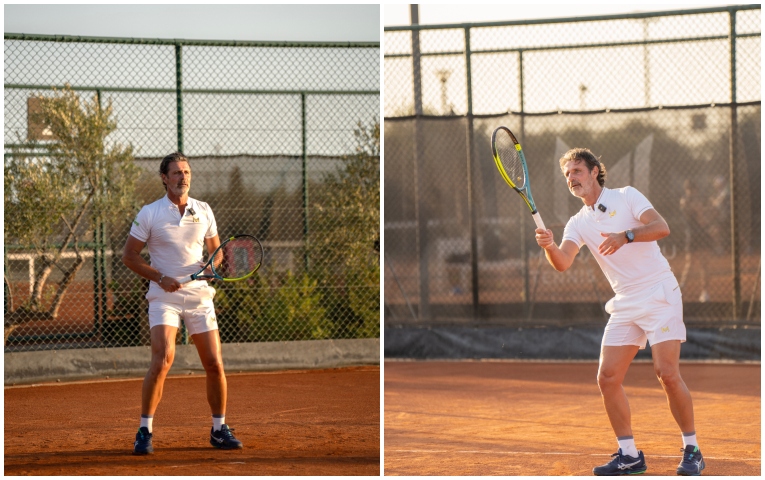
Costa Navarino, Mouratoglou believes, has exceeded every expectation. “First, as a destination, I think it’s incredible. It’s one of the best in the world for sure. And also the tennis center: the quality of the facilities, the quality of the people who are running it … I think we are really right at the top of what we expected.”
This is why he sees the partnership growing stronger each year. “We want to be here long term, working with people who come on vacation and also with those who travel specifically for tennis. The idea is always the same: to help them grow their game and feed their passion.”
That passion extends far beyond Greece. “More generally, we want to keep evolving, to keep developing tennis academies that take children from a young age and help them become professionals. At the same time, we want to grow our network of centers that welcome everyone, even those who play just for fun, and help them raise their level, too.”
The scale is ambitious: ten new centers every year for the next five years. “We want to be everywhere we can be,” he says, but then adds that he will not compromise his own high expectations. “I will never go to a hotel that doesn’t match the standards we want to provide. That’s why we are so happy here in Costa Navarino; because we share the same philosophy about details, being client-oriented, and delivering top quality everywhere, whether it’s in the restaurants, on the golf course, or on the tennis courts.”
For Mouratoglou, Costa Navarino isn’t just a professional partnership, it’s now a family ritual as well. “I’ve traveled everywhere in the world,” he says. “For the last twenty years, I’ve been on tour about forty weeks a year with top players, staying in the best hotels and resorts. And yet I choose to spend my vacations at Costa Navarino. I think that says everything.”
The first impression was unforgettable. “When I walked into the room with my wife, she turned to me and said, ‘This is the best hotel room we’ve ever had.’ That’s still my favorite moment. The quality here is just unmatched.”
For first-time visitors, his advice is simple: embrace everything. “What I love about Greece, and it’s especially true here, is how well people speak English. It sounds like a detail, but it changes everything. Then, of course, the food. The restaurants at Costa Navarino are incredible. And beyond the sea and the beaches, you have all the different swimming pools. If you have kids, the water park is a must – my children never want to leave.”
Embracing the new
Beyond coaching, Mouratoglou has also made waves as an innovator. His most radical initiative to date is UTS (Ultimate Tennis Showdown), a tournament format launched in 2020 with shorter sets, a shot clock, and new rules designed to create faster, more emotional and more engaging matches for the digital generation.
“Tennis is my passion, and I will never do anything against it,” he says. “When people said UTS was against tennis, it was the most stupid thing I ever heard. I’m the number one fan of the ATP, WTA, and the Grand Slams.”
But, he adds, the sport has to face reality. “The new generations are not able to sit for three hours and watch a slow match with long downtimes. If we want them to fall in love with tennis, we need to offer something different: shorter, fast-paced, with more energy and more show. It has to be fun, it has to be exciting.”
That vision is catching on. “Every year we fill bigger stadiums. The best players in the world compete in UTS, and they love it. For me, UTS is probably the key to bringing under-40 non-tennis fans into the sport. In the last five years, it’s one of the most important things that’s happened for tennis.”
Mouratoglou has never been afraid to challenge tradition. He was among the first to push for in-match coaching, an idea once considered unthinkable but now fully accepted.
“Everyone was against coaching in tennis, which for me was completely wrong,” he says. “Coaching is just part of sports. In football, basketball, boxing – almost all sports, really – you have coaches. Why not in tennis?” Winning over the federations took time, he admits, but today the change feels natural.
His latest proposal is even bolder: abolishing the second serve. “One of the problems in tennis is the downtime. First and second serves create too much of it. I think there should only be one serve,” he says.
Yet he is quick to underline that he does not want to change the essence of the game. “At UTS, we experiment; we have only one serve, and other adjustments. In the end, it’s not for me to decide. It’s the fans who will say where tennis should stand.”
New names, new fans
As the era of Federer, Nadal and Djokovic gives way to a new generation, Mouratoglou remains pragmatic about the debate. “It’s funny, because that’s the history,” he says. “When only two or three players win everything, people say it’s boring. And when different players win, people say there is no real champion. They always find a reason to complain.”
For him, the current landscape is anything but dull. “With Alcaraz and Sinner at the top of the game, it’s incredible. The quality is unbelievable, and there’s suspense because you never know who’s going to win. Wimbledon went to Sinner, Roland Garros to Alcaraz. It’s not always the same champion, and that makes it exciting.”
Even Nadal’s long reign in Paris, he argues, could feel predictable. “The most boring time was when Rafa was winning Roland Garros every year. There was zero suspense; you knew the result before the final.”
Looking ahead, he sees promise in the next wave. “There are many young players coming up. Ben Shelton, for example, and Pagonis, the young Greek kid. It will take time, but surprises will come. At the same time, having a base of players who win regularly also gives stability to men’s tennis, and that’s good.”
Above all, Mouratoglou believes the sport thrives on icons. “Tennis needs idols, superstars,” he says. “They’re the ones who inspire young kids to pick up a racket or dream of becoming professionals. Every sport needs its legends.”
This interview has been edited for length and clarity.