DISCOVER
Kalamata’s vibrant farmers’ market is a celebration of Messinia’s agricultural richness, local life, and everyday ritual.
By Marina Petridou
Twice a week, on Wednesdays and Saturdays, Kalamata’s Central Market becomes the city’s beating heart. Just an hour’s drive from Costa Navarino, shoppers weave through bustling crowds, vendors arrange their freshest produce, and the hum of conversation fills the air. A ritual woven into the fabric of local life, shopping here is more than an errand – it’s an experience to savor.
This is no ordinary open-air market. Here, vendors don’t merely call out their goods; instead, conversations flow naturally between farmers and customers. Perhaps that’s why, a few years back, Le Figaro named Kalamata’s farmers’ market one of Europe’s most beautiful and bountiful – “the rural soul of the Peloponnese,” and a reflection of Messinia’s famously fertile land.
“Whatever seed you plant in this land, it will grow,” says a farmer from the village of Akovitika as she arranges her Messinian spring potatoes in preparation for eager customers.
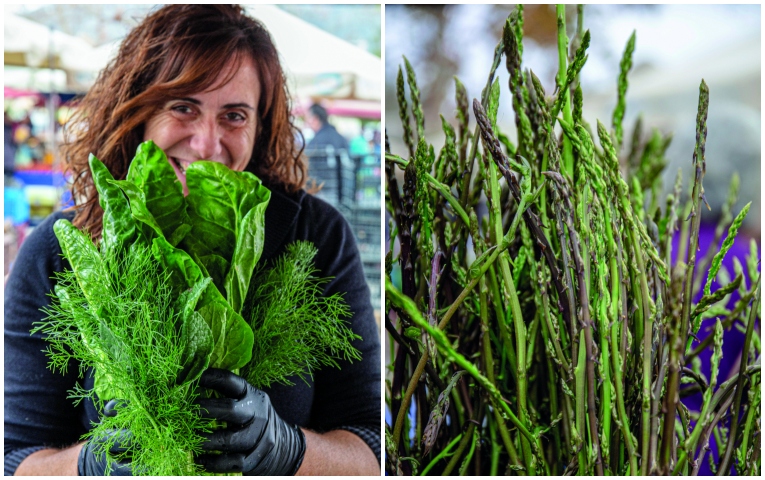
Producers from across the region bring their harvest to the city, filling the stalls with the full range of Mediterranean flavors. Cultivated greens and wild herbs abound; among the rare finds is sinapi, the mustard-flavored green used to produce mustard seeds, brought from Mikromani. Beside it are the myrothies, as locals call fragrant herbs such as fennel, dill and parsley. Wild asparagus and wild baby artichokes are also here. “The asparagus goes perfectly with eggs – just be sure to cut off the tough ends,” says the vendor, the same woman who forages them from the nearby mountain slopes. Nearby, a villager from Asprohoma proudly sells garlic from his own garden, and just a few stalls down, a woman is busy making fresh peanut butter on the spot from locally grown peanuts.
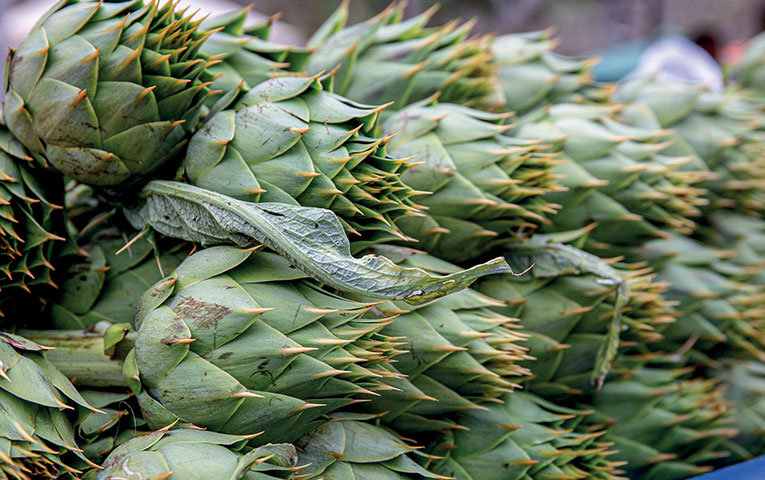
A Market Full of Life
Locals and visitors alike come here not just to shop, but to meet up and to chat, either at the stalls or at nearby cafés over early-morning coffee or tsipouro, in a timeless ritual of Greek socializing.
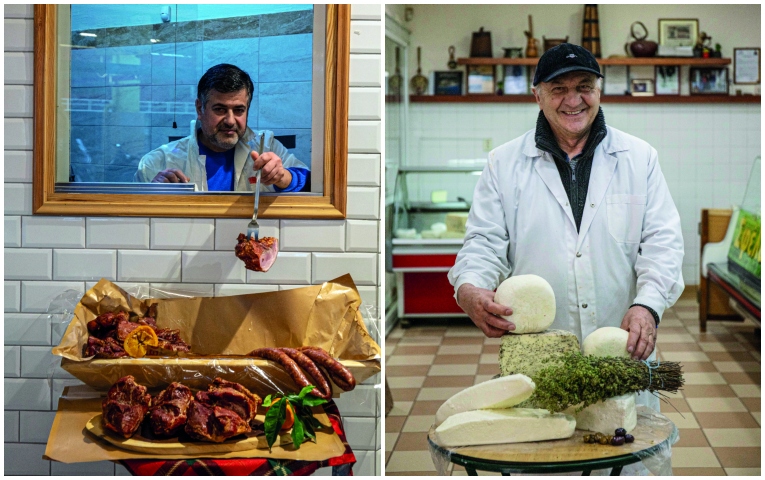
The original Central Market of Kalamata, which opened in 1929, once operated out of the building that now houses the Archaeological Museum. The current market hall, built the 1980s, combines an open-air fruit and vegetable area with a number of permanent indoor shops. These include grocers offering local staples like Kalamata olives and petimezi (grape molasses); cheese shops selling sfela (a local PDO cheese), award-winning feta, and graviera infused with oregano from Mt. Taygetos; and butcher shops with traditional cured meats and sausages. In the fish market, the day’s catch arrives straight from the Messinian Gulf.
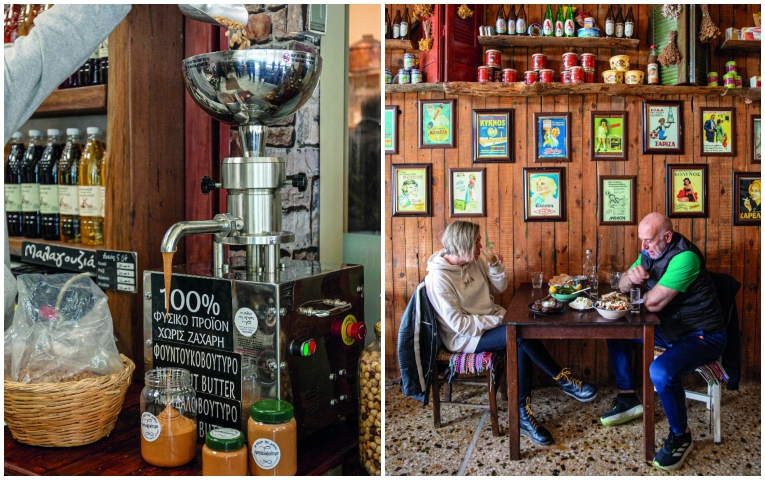
Exceptional Finds
The indoor market also hosts a small organic section and stalls offering rare specialty items, including sweet watermelon preserve and Melissokomia Messinias honey. Homemade pickled onions – another local treat – are available, too, along with massive, unusually shaped beef heart tomatoes. Grown from seeds brought over from Canada twelve years ago, they’re described by the farmer as “a true winter tomato, available only until Easter.” Other local varieties, such as the summer hontrokatsari tomato and the Elpida tomato, thrive in the region, too.
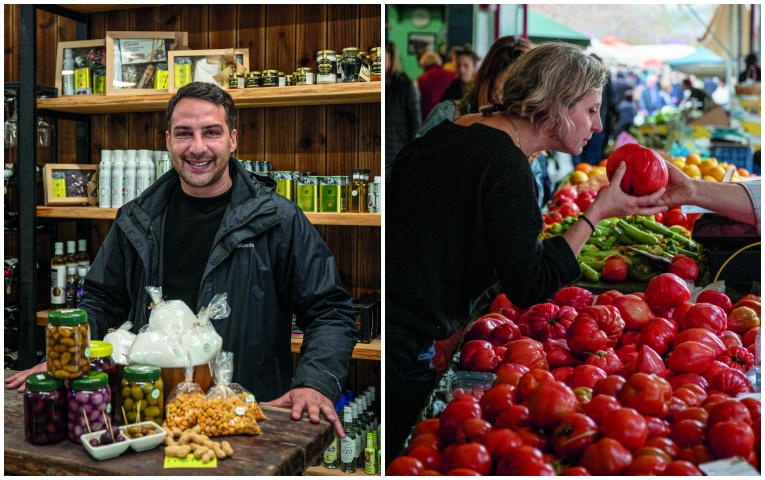
One especially intriguing product you may find at the market is the lupin bean – also known as the “Mani raisin.” With a history stretching back to ancient times, the lupin was praised by Dioscorides, the father of pharmacology, who identified two varieties: sweet and bitter, both prized for their nutritional benefits. Visitors to the Nekromanteion of Acheron (an ancient Oracle of the Dead located near the Acheron River in Epirus, believed in antiquity to be an entrance to the underworld) are said to have eaten lupin beans before consulting the spirits. The beans’ alkaloid content was believed to induce a trance-like state. Today, Messinian farmers harvest lupins in July, then boil and soak them for at least eight days before they’re ready to eat.
As you wander past the colorful produce on display, you’ll spot both first-time visitors pausing to admire the region’s abundant riches and long-time residents greeting familiar vendors. For everyone, the market is more than a place to shop – it’s a place to connect: with the land, the seasons, and one another. In Kalamata, it’s a market that feeds both body and soul.