DISCOVER
Experiencing the subtle rhythms and vibrant celebrations along the arc of Easter at Costa Navarino.
Edited by Paulina Björk Kapsalis
Easter in Greece is not defined by a single moment, but by a gradual shift in atmosphere. It begins almost imperceptibly, with an adjustment in pace – a sense of anticipation that intensifies over days rather than hours. Traditions emerge gently: the scent of freshly baked koulourakia, the soft glow of candlelight from the chapel, the joy of people gathering. It begins as a reflective, almost inward-looking time, then steadily opens outward, becoming more communal and expressive. By the time the midnight Resurrection arrives, with candles lit and passed from hand to hand, the mood has transformed entirely. By Easter Sunday, celebration takes hold: tables fill, music carries, and fires crackle.
At Costa Navarino, this progression is felt in full. What defines the experience is not only the traditions themselves, but the way they unfold – each moment building on the last, each shift in tone quietly preparing for what comes next.
Anticipation
The first signs of Easter appear gently across Costa Navarino, not as a single event but as a series of small, sensory moments that begin to gather.
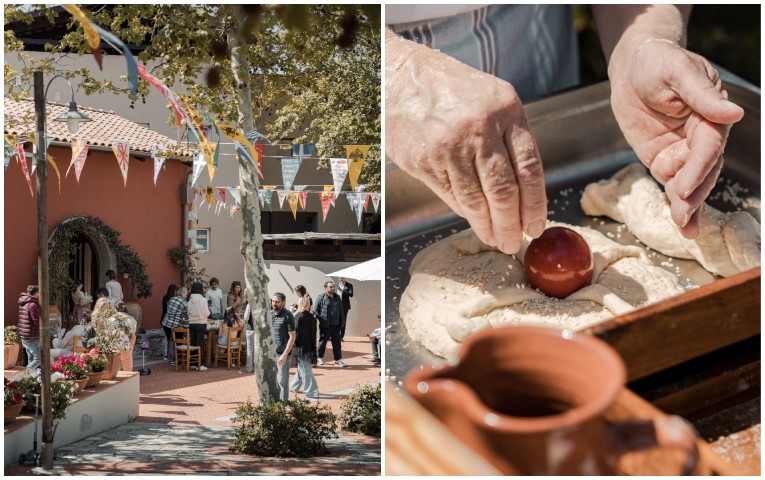
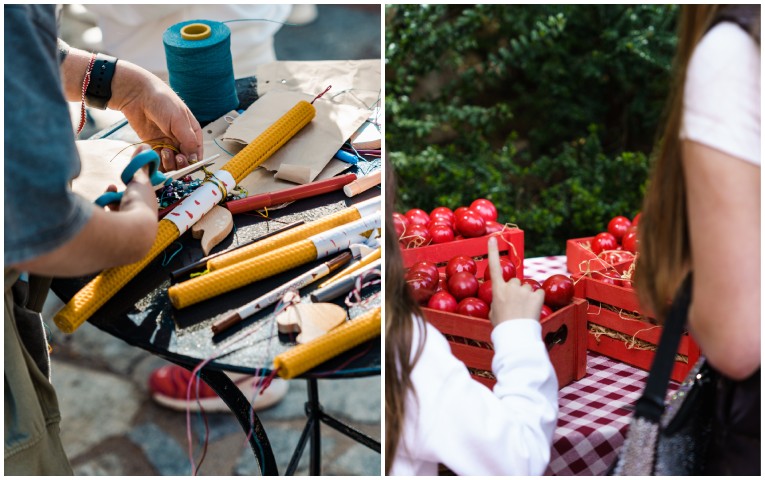
On Good Friday, baking as well as candle and lantern-making workshops invite active participation at the Clock Tower at Navarino Agora. Nearby, at the St. Eleni Chapel, a festive market offers local products such as wine, cheese, and handcrafted Easter candles, with proceeds supporting the local charity, “The Smile of the Child.” More lanterns are crafted at St. Sampson Chapel in Navarino Dunes ahead of the evening’s procession. The rhythm feels unforced, yet quietly anticipatory, as if each moment is preparing for what follows.
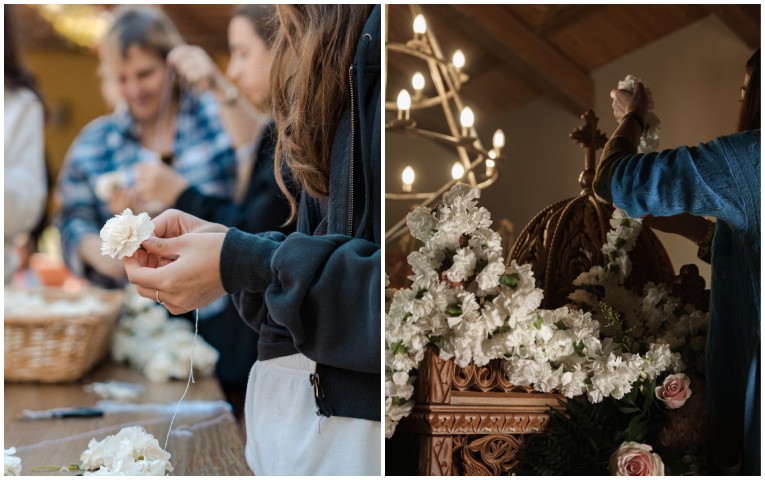
As evening arrives, the mood becomes more contemplative. At the chapels, the decoration of the Epitaphios begins. For many visitors, this is a first encounter with one of the most spiritual Orthodox Easter traditions: a flower-adorned bier representing the tomb of Christ. Guests are invited to take part, placing flowers by hand and becoming part of a ritual that is both intimate and collective.
In the evening, the Epitaphios processions move slowly through the grounds, candlelight flickering against the dusk. At Navarino Agora, the ceremony is accompanied by a philharmonic orchestra, adding a musical layer to the experience. Movement, light, and sound come together in a moment that feels suspended in time, as the glow of the candles guides the way.
The Turning Point
Holy Saturday carries a sense of anticipation that builds steadily. At Navarino Agora and the Dunes Agora, traditional baking and candle-making workshops continue, with guests creating their own lambades – the candles carried later that evening. In Navarino Dunes, children combine play and tradition, decorating Easter eggs. There is a sense of readiness in the air as the day moves toward the moment everyone is waiting for.
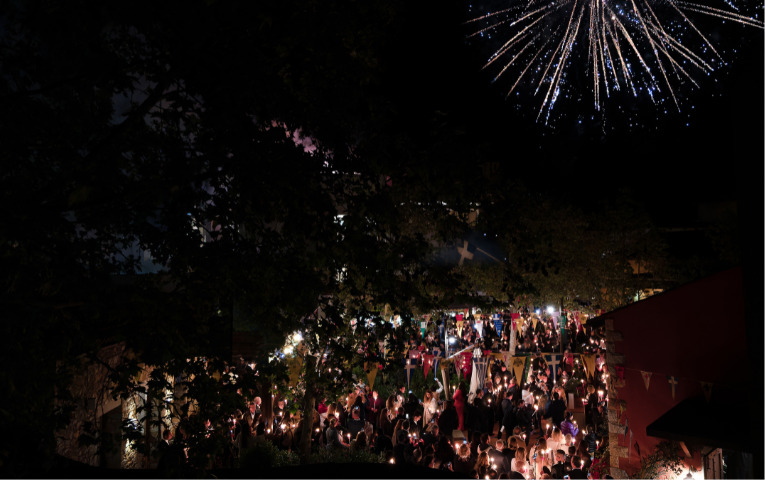
That moment arrives at midnight. At the chapels, the Resurrection, or Anastasi, is marked with the sharing of the Holy Fire. One flame becomes many, passed from candle to candle until the darkness gives way to a collective glow. At Navarino Agora, fireworks follow, briefly illuminating the night sky.
From there, the energy changes. At W Costa Navarino, post-Resurrection dinners unfold at Parelia and the W Lounge, where traditional dishes are reinterpreted and the mood becomes more social. Music carries into the early hours, extending the sense of celebration that has just begun.
Celebration
By Easter Sunday, the transformation is complete. The day at the Dunes Agora begins with an Easter egg hunt for the little ones, before expanding into a shared celebration. Fire becomes part of the landscape through open-air cooking and communal meals, adding warmth and energy to the day’s celebrations.
A traditional glenti, with live Greek music and dancing, takes shape, bringing people together in a setting that feels both spontaneous and rooted in custom. At the Dunes restaurants Pero and Morias, Easter lunches unfold to the sound of live bands, while the more informal setting of the Kafeneio offers festive meze accompanied by traditional music. As the day moves on, jazz and softer melodies take over in the lounges, extending the atmosphere into the evening. Meanwhile, at Navarino Agora, swing music and festive spirit fill the amphitheater.
At W Costa Navarino, guests head to the beach as the celebration culminates by the sea at Parelia. Open-fire cooking on the sand sets the tone for a new kind of Easter experience, with a menu by award-winning chef Nikos Billis that draws on traditional flavors. A live performance by Harry Varthakouris adds contemporary energy, while the changing light – from the glow of fire to the brightness of day – gives Easter its final, expansive flourish.
A story to remember
Returning home after spending Easter in Messinia, what lingers is not any single moment, but the sense of progression. From the first quiet preparations to the shared glow of midnight and the warmth of Sunday’s celebrations, each moment flows into the next, creating an arc of tradition, light, and joy that unfolds gracefully over time.