DISCOVER
Guests explore Messinian history, craftsmanship, and contemporary creativity through MOCNA’s curated art collection.
Edited by Paulina Björk Kapsalis
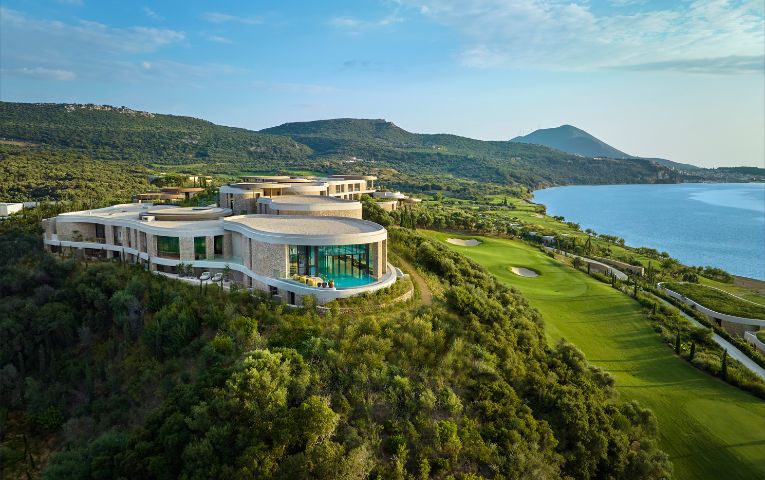
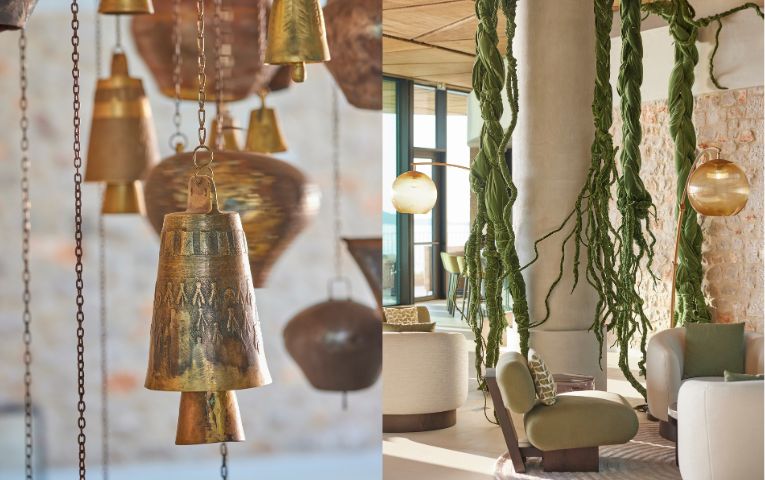
At Mandarin Oriental, Costa Navarino (MOCNA), art is woven into the guest experience, the architecture, and the interiors, creating a dialogue between contemporary creativity and the cultural landscape of Messinia. Nestled into the hillside above Navarino Bay, the architecture of the resort takes its cues from the region’s traditional “mandria” – humble stone structures once used by shepherds. This conversation continues at the entrance, where Mare Studio‘s Shepherd’s Bells – Kudúnes welcomes guests with a powerful reminder of the pastoral traditions that have shaped this landscape for centuries. The vintage, hand-forged bells hang from long metal chains at varying heights, their aged patina and irregular forms reflecting the rugged beauty of the Peloponnesian countryside.
The bells form part of a broader curatorial collaboration with Athens-based Mare Studio, whose approach centers on connecting contemporary audiences with local history and craftsmanship. Across the resort, artworks sit alongside rare artifacts, historic photography, and objects of everyday life, inviting guests to experience the Peloponnese through the stories embedded in its material culture.
Textiles: Threads of Landscape and Memory
Textile traditions run deep in Messinia, where weaving once formed an essential part of daily life. Throughout the resort, contemporary artists reinterpret this heritage, transforming fibers into expressions of memory and identity.
One of the most striking examples among the works developed through Mare Studio’s collaborations with contemporary artists is Maro Michalakakos’ monumental installation The Braids. Inspired by the olive trees of Mani and memories of her grandmother sitting among them, the work transforms olive-green velvet into flowing braided forms in the MOCNA Lobby. The piece speaks simultaneously of women, land, ancestry and the olive tree – perhaps the most enduring symbol of the Peloponnese.
Maria Sigma‘s On the Dunes, inspired by the textures and contours of the Peloponnesian landscape, evokes the windswept dunes that frame Costa Navarino’s coastline. Rather than depicting the landscape directly, this collaboration captures its atmosphere – sunlight, texture and movement translated into cloth.
The dialogue between tradition and reinvention continues through works such as Lines, designed by Mare Studio and woven on a traditional handloom, and the carefully selected vintage textiles displayed throughout the property. Together, these pieces remind us that weaving is more than a craft; it’s a language through which communities have preserved their ways of seeing the world.
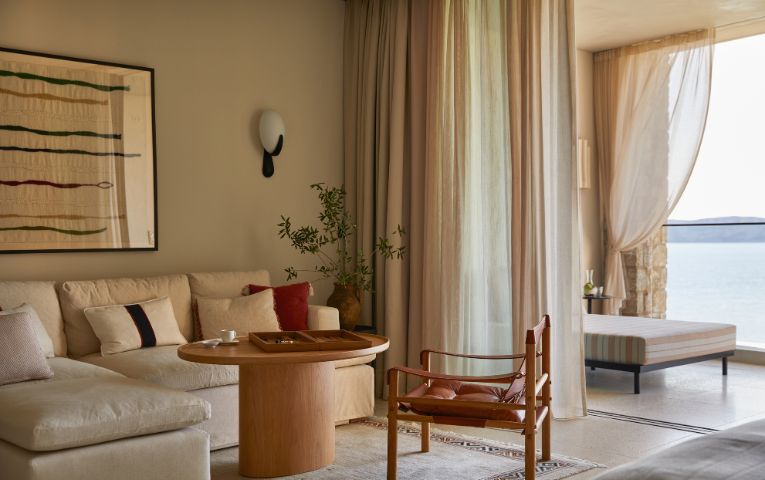
Ceramics: Shaping Earth into Art
If textiles speak of human hands and memory, ceramics connect the collection directly to the earth and this land’s ancient legacy. The large ceramic jars displayed in guest corridors and public spaces immediately establish this connection. Echoing the ancient “pithoi” once used to store olive oil, wine, and grain, they evoke the agricultural traditions that continue to define the region today. Vintage Acroceramus fragments and ceramic Epikrana reference the decorative architectural elements that still sometimes adorn rooftops, columns, and façades across Greece.
These ancient materials take new shapes in works developed through Mare Studio’s collaborations with contemporary ceramic artists. While the handmade bowls and tiles created with Kalamata-based ceramicists Haroula Koropouli and Ilias Christopoulos, displayed around the resort, draw inspiration from Byzantine engraving techniques and Ottoman-era pottery, Despina Charitonidi’s modern ceramic lotus flowers adorn the wall at restaurant Oliviera.
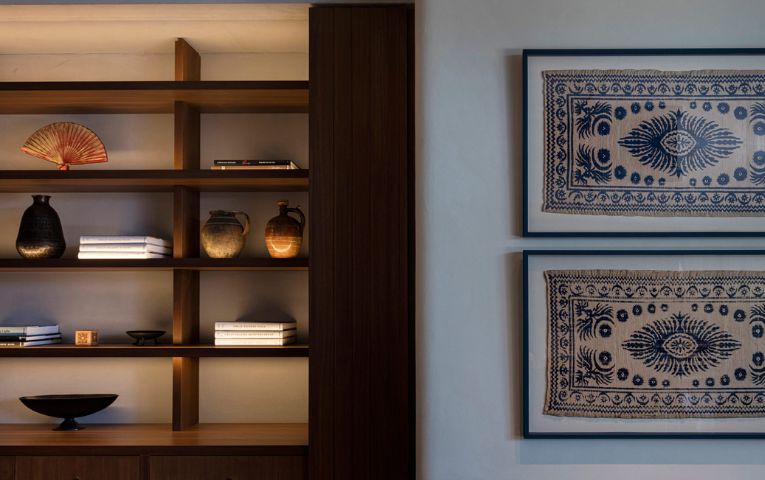
Among the most unexpected works is Alexandros Tzannis’ Ceramic Fan. By transforming an object associated with movement and air into a ceramic sculpture, the artist blurs the line between functional object and artwork. It also introduces a recurring motif throughout the collection: the fan.
Objects, Artifacts and Stories
Many of the most memorable works at MOCNA occupy the space between art and artifact. Rather than separating contemporary creativity from history, the collection allows them to coexist.
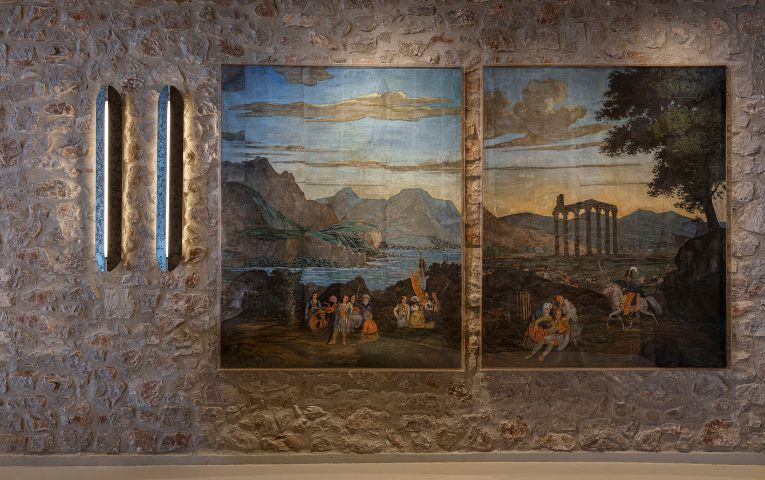
The rare nineteenth-century panorama Le combat des Grecs offers a direct link to one of the defining moments in local history: the Greek War of Independence. Elsewhere, vintage gravures and historic maps invite guests to imagine the Peloponnese as it appeared to travelers, explorers, and philhellenes of earlier centuries.
Traditional tools and architectural fragments further enrich this narrative. Carved wooden distaffs, antique rosettes, and ceramic architectural elements reveal the artistry once embedded in everyday objects. Even functional items such as fans become vehicles for storytelling. The bespoke fan created with Dimitris Papaioannou for the resort merges references to Ancient Messinia with the visual language of both Greece and Asia – a fitting gesture for Mandarin Oriental, whose identity has long been symbolized by the fan.
Throughout the resort, fans reappear in different forms, from ceramic interpretations to handcrafted contemporary designs, creating a subtle thread connecting local craftsmanship with the brand’s own heritage.
Living with Art
The collection extends beyond public spaces into the suites and villas, where art becomes part of everyday living. Carefully selected pieces such as Mare Studio’s Kentímata, based on fragments of nineteenth-century Greek costumes, celebrate regional traditions, while historic photographs by Robert McCabe, Dimitris Harissiadis, Nikolaos Tombazis, and Joan
Leigh Fermor capture landscapes, people, and moments that have shaped the modern Greek imagination.
Together they create interiors that feel collected rather than decorated – spaces where history, craftsmanship, and contemporary design naturally coexist.
The collection comes full circle with the bells. Smaller versions of Shepherd’s Bells appear in the suites, while ceramic interpretations created in collaboration with Dimitra Stavrou feature in the Royal Villa. Like the original installation at the entrance, they softly echo the pastoral traditions that continue to shape the landscape of Messinia.